


A fresh controversy is rippling through Silicon Valley after a well-known venture capitalist warned that mediocre engineers coming to US on H1B visas are weakening America’s tech workforce instead of strengthening it. Her message was blunt, provocative, and aimed directly at policymakers preparing for major visa reforms in 2025.
Asha Jadeja Motwani a respected investor, philanthropist, and widow of Stanford visionary Rajeev Motwani sparked the debate with a sharply worded post on X. She argued that the H-1B system has drifted away from its purpose and now rewards the wrong type of talent.
Mediocre engineering talent coming to the US on H-1B visas is a bad idea. These positions must go to native-born Americans, she wrote. All in all, H1B visas must be reduced in number so that we reserve those visas for absolutely top talent.
Her comment has reopened long-standing concerns about how the U.S. selects foreign workers and whether the current system truly attracts the best and brightest or simply brings in lower-cost labor while sidelining qualified American graduates.
A Call to Protect American Tech Jobs
Motwani insists her position is not anti-immigrant. As an immigrant herself, she acknowledges the enormous value high-caliber global talent brings to American innovation. But she says the U.S. needs to distinguish sharply between exceptional performers and mediocre engineers coming to US on H-1B visas.
Her argument is simple:
If the visa category was meant for rare, specialized skills, why is it being used to hire average workers at lower wages?
Many American STEM graduates say they feel the impact directly especially those who lost entry-level roles to cheaper H-1B hires or trained replacements before being laid off.
One U.S. software engineer commented under her post:
Finally, someone in Silicon Valley said the truth. I’ve trained my H-1B replacement twice. It’s exhausting.
Data Shows Wage Distortions and Rising Frustration
Government data shows that thousands of H-1B applications filed by major outsourcing firms offer salaries below the median wage for similar tech roles. This has intensified concerns that companies prioritize cost savings over quality allowing mediocre engineers coming to US on H1B visa to fill roles that many American workers could perform competitively.
Authority Source:
U.S. Department of Labor Foreign Labor Certification Data Center
(https://www.foreignlaborcert.doleta.gov)
For Motwani, these numbers reinforce her belief that the program is being used as a labor-discount mechanism rather than a tool for strategic innovation.
A Shift in Silicon Valley’s Tone
What made Motwani’s message stand out is how unfiltered it was and how dramatically it contrasted with the tech industry’s usual stance. For years, Silicon Valley giants have lobbied aggressively to expand the H-1B program, arguing that America needs more engineers, not fewer.
But a growing subset of founders and investors now say the opposite:
Innovation depends on elite talent, not volume. And according to them, too many mediocre engineers coming to US on H1B visa dilute the quality of the workforce.
Motwani even praised America’s selective recruitment of high achievers, calling it a strategic advantage in global competition particularly with China’s rapidly growing tech sector.
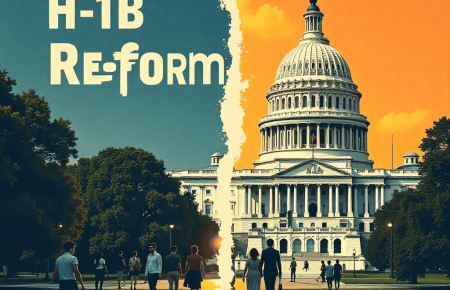
2025 Could Bring the Toughest H-1B Rules Ever
With a new administration promising the strictest immigration controls in decades, Washington is preparing for sweeping H-1B changes. Early policy signals suggest:
- Higher mandatory wages
- Tighter specialty-occupation definitions
- More employer audits
- Prioritizing extraordinary talent
- Lower annual visa caps
If these changes advance, companies will no longer be able to rely on volume-based hiring pipelines especially those leaning on mediocre engineers coming to US on H-1B visas to cut costs.
Why the Debate Matters Now
The U.S. tech industry is at a crossroads. Artificial intelligence, cybersecurity, and advanced semiconductor engineering demand rare expertise and policymakers want to ensure the visa system rewards excellence rather than convenience.
Motwani’s remarks echo a sentiment many tech professionals have whispered privately for years:
Americans shouldn’t be training their replacements, and U.S. visas shouldn’t reward mediocrity.
Bottom Line: A New Direction for America’s Tech Workforce
Whether people agree with Motwani or not, her message has changed the conversation. She argues that America must welcome exceptional innovators while setting clearer boundaries for everyone else.
In her view, the era of overlooking the negative impacts of mediocre engineers coming to US on H1B visa is ending. The future, she believes, lies in a visa system designed for brilliance, not budget-cutting.
And as the political climate shifts, Silicon Valley may soon have no choice but to adapt whether the outsourcing lobby likes it or not.
READ MORE: Visa Free Entry to the United States in 2026: Complete Update List and Requirements
[…] READ MORE: Mediocre Engineers Coming to US on H1B Visa: VC Says its Time To Save Jobs for Americans […]