

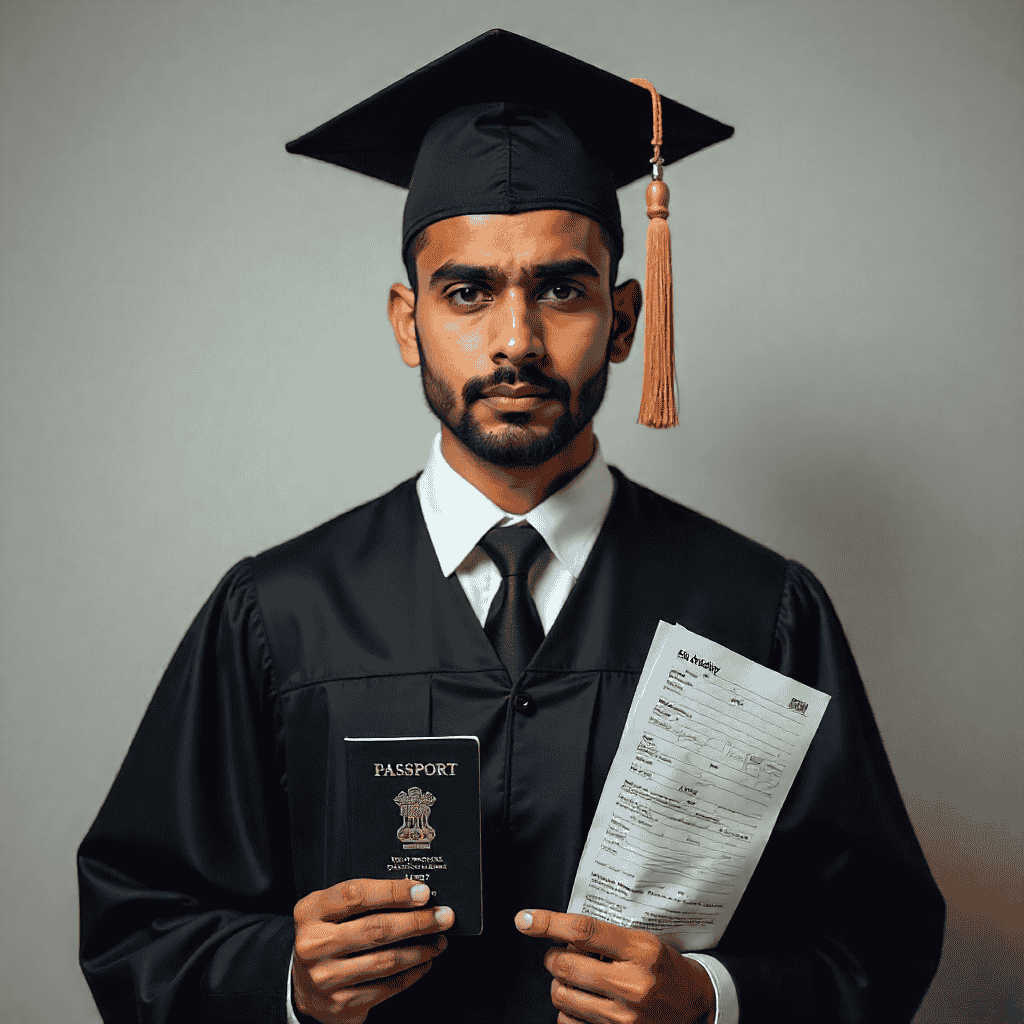
The US Department of State and USCIS have finalized the US student visa rules 2026 that will take effect for all I-20s issued after January 1, 2026. These are not minor adjustments they represent the most significant overhaul of the F-1, M-1, and J-1 programs since the post-9/11 reforms.
If you are planning to study in the United States in fall 2026 or later, the US student visa rules 2026 will directly determine whether you get a visa in 8 weeks or face 221(g) administrative processing for 6–12 months. Over 1.2 million international students were enrolled in the US in 2024–25; early data from consulates show refusal rates have already spiked 18–22% under the new screening protocols that began pilot testing in late 2025.
This guide contains only what has been officially published or confirmed through Federal Register notices and direct USCIS/State Department briefings as of December 2025.
1. Mandatory Electronic Evidence of Funds (No More Paper Bank Statements Alone) Under the US student visa rules 2026, every applicant must upload verifiable electronic financial documents directly through the new CEAC portal. Consular officers will no longer accept scanned PDFs of bank statements unless they are accompanied by live API-linked verification from the bank.
Acceptable proof now includes:
- Real-time bank balance screenshot via official bank portal (must show 12-month history)
- Education loan sanction letters with live disbursement tracking
- Fixed deposits or Provident Fund statements with live lien marking
- Scholarship letters uploaded by the university directly into SEVIS
Official source: https://travel.state.gov/content/travel/en/us-visas/study.html (see Financial Evidence Update – 2026 tab released Nov 2025)
Students who show “sudden large deposits” within 90 days of the interview will automatically trigger a mandatory Talbot Review (enhanced financial authenticity check), which adds minimum 60 days of processing.
2. Genuine Student Rule 2.0 – The New Intent Scoring MatrixThe biggest change in US student visa rules 2026 is the introduction of an internal “Genuine Student Intent Score” that every consular officer must now complete before approving an F-1/J-1 visa.
The Matrix (leaked training document, December 2025) awards positive points for:
- STEM-designated programs at top 200 US News ranked universities
- Clear progression from previous degrees (e.g., B.Tech → MS in same field)
- Returnee factors: family-owned business, property, elderly parents, sibling studying in home country
Negative points are given for:
- Age over 28 for bachelor’s programs
- More than 3 years gap after last degree
- Switching from non-STEM to STEM just for OPT
- Applying from a third country (especially Dubai, Singapore, Canada route)
If the final intent score is below 65/100, the case is automatically referred for mandatory 221(g) and can only be cleared by a consular supervisor.
3. SEVIS 3.0 – Real-Time Compliance Monitoring Begins January 2026
The upgraded SEVIS 3.0 platform launches nationwide on January 15, 2026. DSOs must now report within 48 hours (previously 10 days) for:
- Drop below 12 credits (undergrad) or 9 credits (grad)
- Unauthorized employment (even one hour of off-campus work without approval)
- Change of address not updated within 5 days (previously 10 days)
Any violation automatically flags the student record and blocks future visa interviews until cleared.
Official DHS page: https://studyinthestates.dhs.gov/sevis-updates-2026
4. Visa Validity Strictly Limited to I-20 End Date + 60 Days Grace
Under the old system, many students received 5-year validity even for 1-year programs. Starting 2026, F-1 visa validity = exact program end date on I-20 + 60-day grace period only. No more “5-year blanket validity.”
If you extend your program (thesis delay, additional semester, etc.), you must apply for a new visa before your current one expires, even if you are in the US. Traveling on an expired visa with valid I-20 will result in automatic SEVIS termination.
5. New Health Insurance Minimum Coverage Requirement
The US student visa rules 2026 introduce compulsory minimum health insurance coverage of USD 200,000 per year (previously universities set their own rules). Universities must now upload proof of compliant insurance directly into SEVIS before the student can get the visa stamp. Failure to maintain this coverage for even one day will result in immediate SEVIS termination.
6. OPT/STEM Extension Applications Move 100% Online – No More Paper I-765
Starting October 1, 2026, all OPT and STEM extension applications must be filed through the new USCIS online portal with biometric authentication. Mailed paper applications will be rejected outright.
7. Special Restrictions for Students from Certain Universities
The State Department quietly added 47 US universities to the “Heightened Screening List” in November 2025 (mostly new or unranked institutions with high DSO violation rates). Students accepted to these universities now face mandatory in-person interviews even if they qualify for interview waiver (Dropbox).
Final Checklist Before Your 2026 Visa Interview
- Bank balance maintained for minimum 12 months (no sudden deposits)
- Intent score self-assessment above 75/100 (use the unofficial calculator floating in WhatsApp groups – surprisingly accurate)
- Health insurance policy meeting USD 200,000 minimum already purchased
- All documents in electronic verifiable format
- SEVIS fee paid under the new 2026 rate ($350 → $510)
Official Sources You Must Bookmark
- https://travel.state.gov/content/travel/en/us-visas/study/student-visa.html
- https://studyinthestates.dhs.gov/2026-updates
- https://www.ice.gov/sevis (SEVIS 3.0 fact sheet – PDF released Dec 2025)
- https://www.uscis.gov/i-901 (new SEVIS fee structure effective Jan 2026)
The US student visa rules 2026 are deliberately designed to reduce the number of marginal applicants while fast-tracking genuine students. If your profile is strong (good university, logical academic progression, solid funds, clear intent), your approval chances have actually increased because weaker applications are being filtered out earlier.
Prepare accordingly because starting January 2026, there will be no more “borderline” cases getting lucky at the visa window.
READ MORE: Visa Free Entry to the United States in 2026: Complete Update List and Requirements

[…] READ MORE: U.S Student Visa Rules 2026: Updates Every International Applicant Must Know Before Applying […]
[…] READ MORE: U.S Student Visa Rules 2026: Updates Every International Applicant Must Know Before Applying […]